




The Problem
Somewhere along the way, crypto’s UX completely broke down. Users and developers started putting more energy into navigating blockchain infrastructure than building and using new applications. In the process, we made it far too hard for normies to navigate. So instead of mass adoption, we’ve just pushed the same users from one chain to another.
Applications have always been tied to their underlying blockchains. But single-chain apps no longer make sense in a multichain world.
The Solution
At Avail, we believe app developers should be able to build on their blockchain of choice, whether app-specific, L1, or L2, without negatively impacting the experience they offer their users. That’s why we built Avail Nexus, a multi-chain coordination layer for crypto.
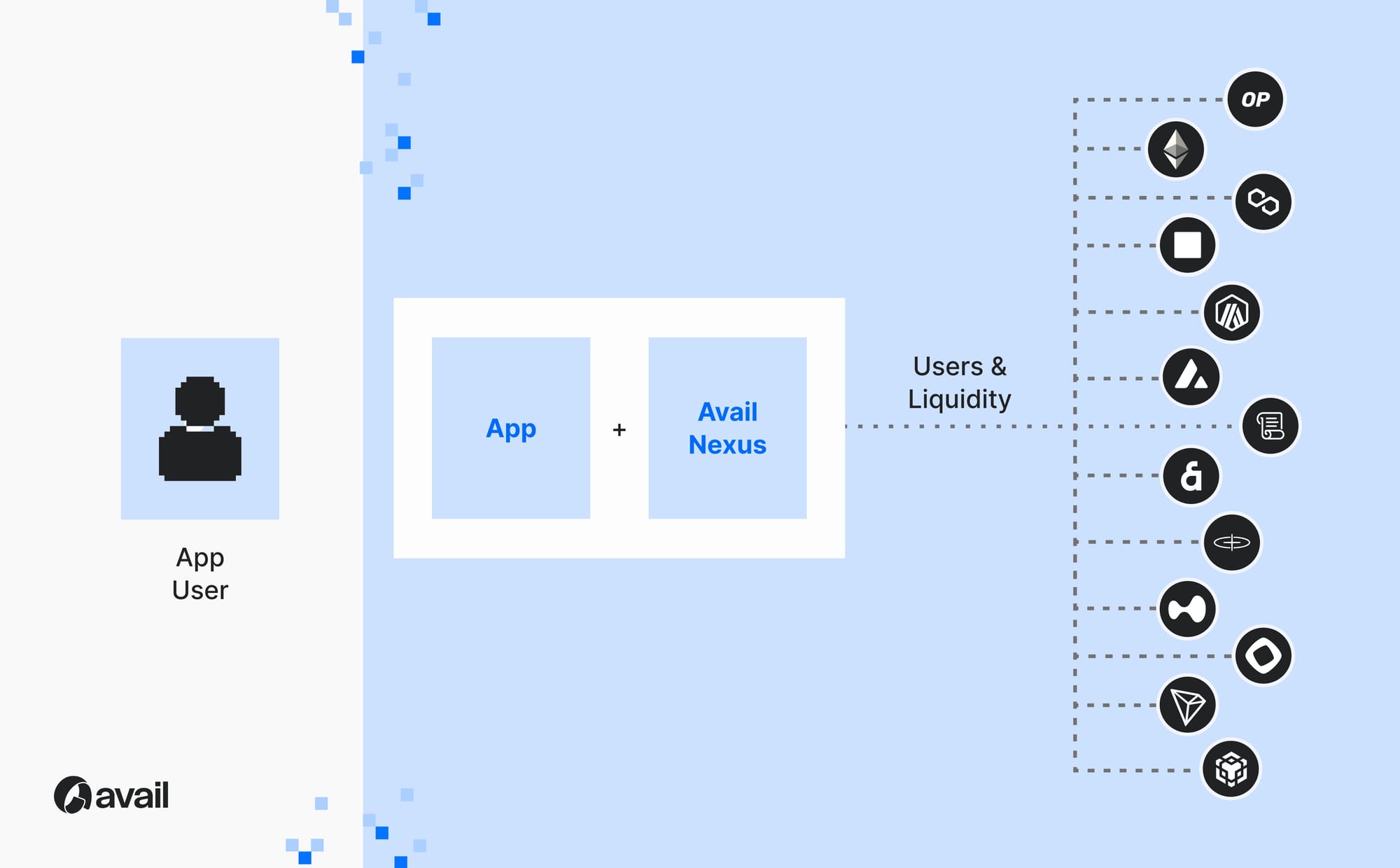
Nexus isn't a bridge. It’s a protocol that treats all blockchains as a single, coherent state machine. Integrate it once, and your users can instantly send and receive assets across 13+ networks, all from within your App.
The Opportunity For Blockchain Apps
When blockchain apps aren’t confined to a single chain, users and liquidity can be onboarded from multiple chains at once. Avail Nexus lets any user from any network use your app.
This instantly increases a blockchain app’s Total Addressable Market (TAM) as users and liquidity can be onboarded from anywhere.
This creates an entirely new class of multi-chain apps, called Liquid Apps.
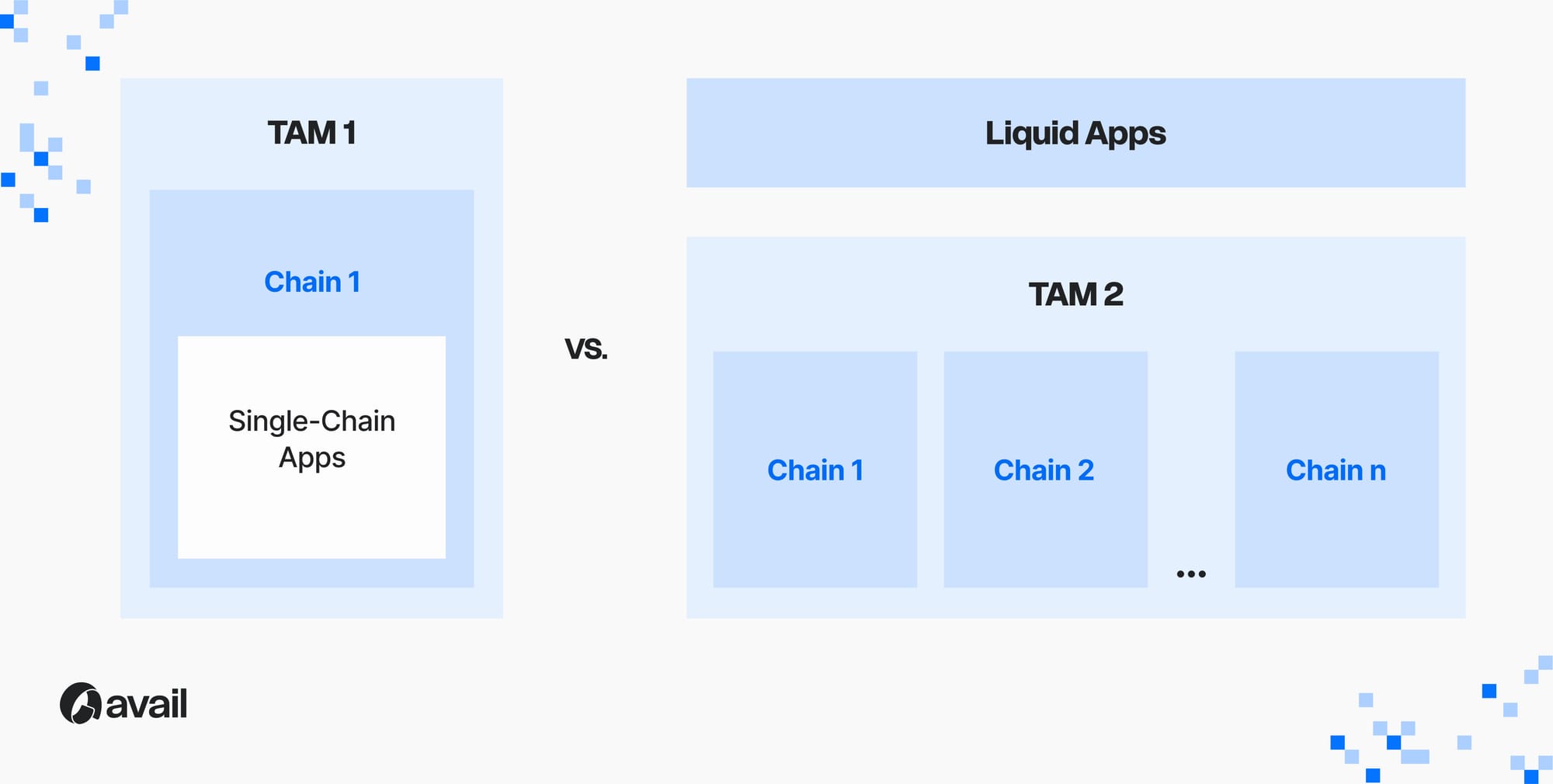
Single-Chain Apps force users with assets on other chains to interact with the underlying blockchain infrastructure before using their app.
Want to use a single-chain app but don’t have funds on this network?
First, you need to go to this bridge, get gas, and move the funds; then you can use the App. This can quickly become very complex…
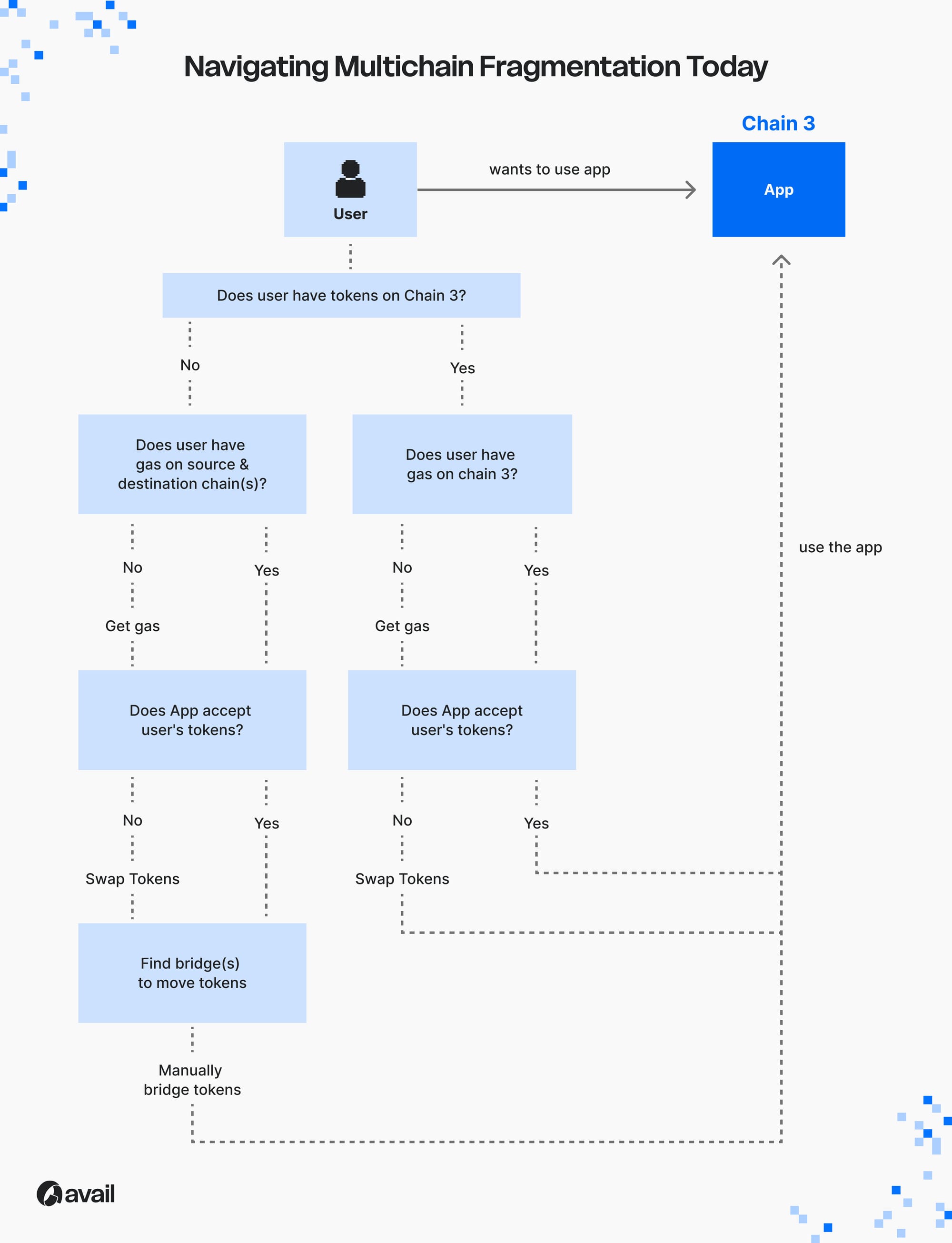
When there were just a handful of blockchains, this wasn’t so bad. Now, with so many active blockchains and new ones launching all the time, the default UX pattern that has become crypto’s standard is fundamentally broken.
Avail Nexus instead allows developers to launch liquid apps, one app to many chains.
Avail Nexus treats all assets in a user’s wallet as one unified balance. This allows users to spend their unified balance across any network. It’s one balance for all of crypto.
Clober is a DEX using the Nexus SDK that launched on Monad and on day one enabled users to start trading with assets they hold across multiple blockchains. You can try it out now.
How Does Avail Nexus Work?
In short, Avail Nexus interacts with Crypto’s infrastructure, so your users don’t have to.
Let’s take an example.
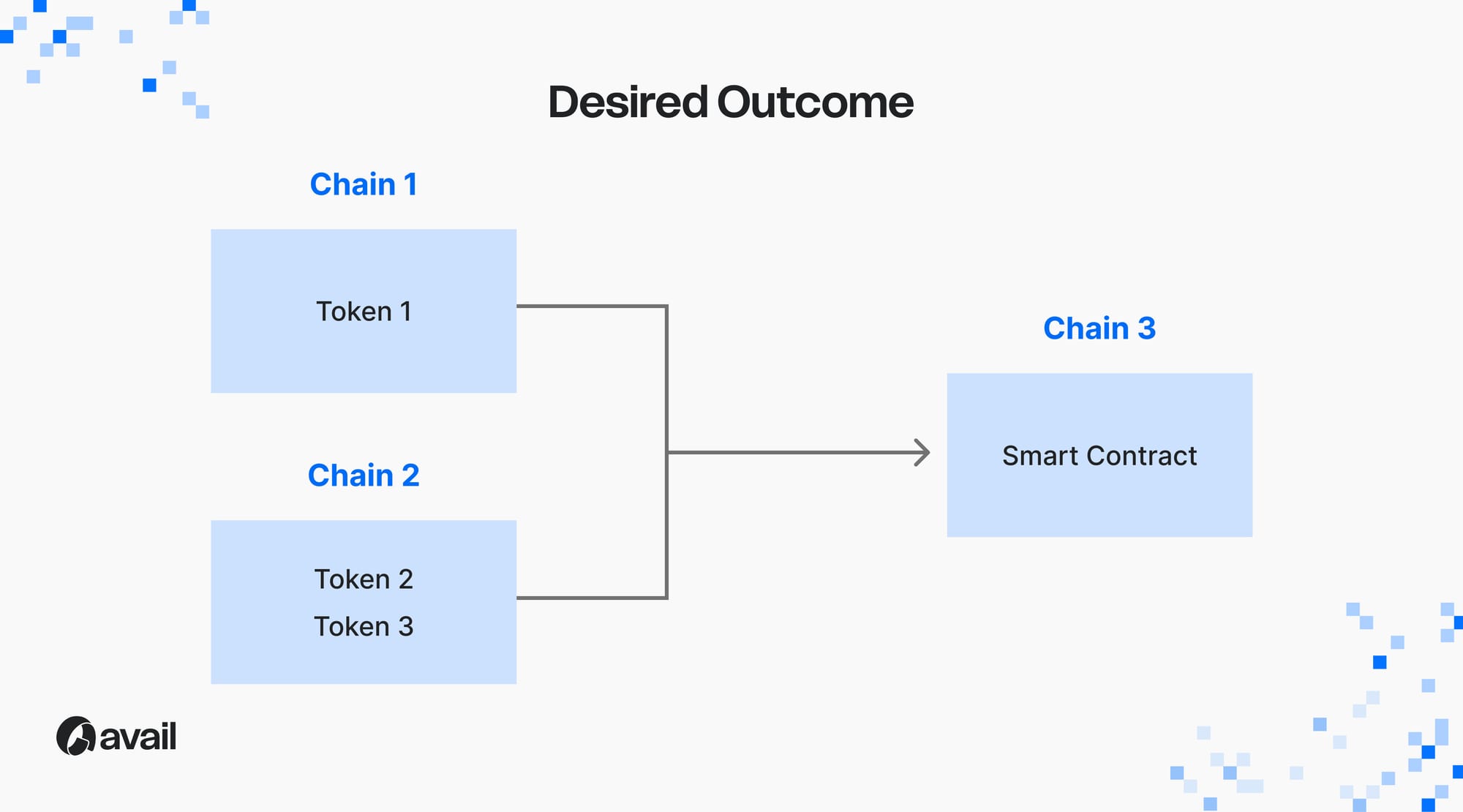
Say you have multiple assets spread across Chain 1 and 2, and you want to deposit them into a smart contract on Chain 3. With the Swap & Deposit function, you can enable a user to do this within your app with just one button.
Nexus determines what’s required to achieve the outcome, based on the user’s balance, and then it dynamically creates an intent accordingly.
Avail Nexus
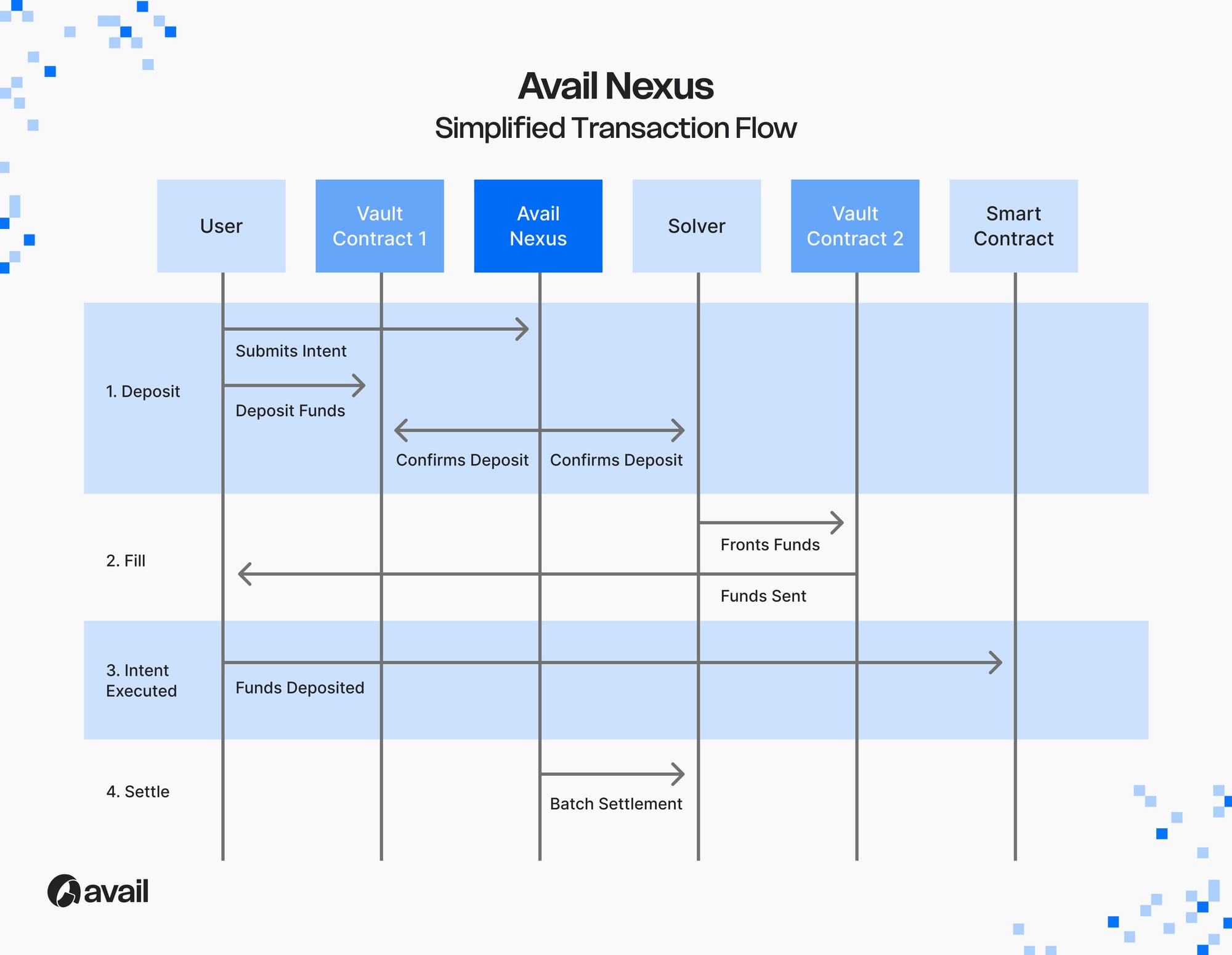
Avail Nexus doesn't take custody over the user’s funds, but it does play a key role in orchestrating asset movements onchain.
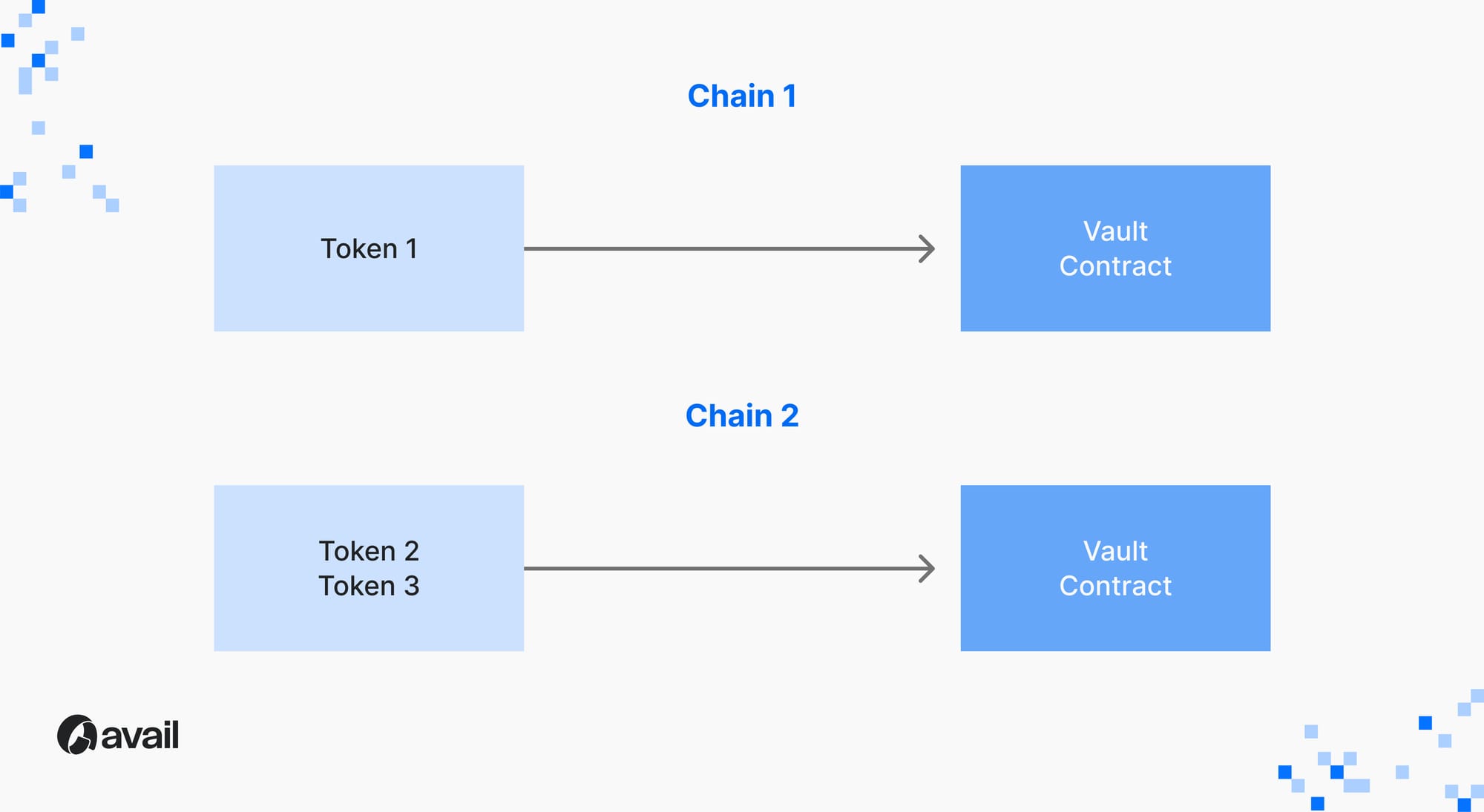
Continuing with our example, the user expresses their intent to deposit funds from Chains 1 and 2 into a smart contract on Chain 3. Avail Nexus will then verify the user’s balance to ensure the intent can be executed. The user’s funds are deposited into vault contracts on Chains 1 and 2 to avoid a double-spend. The solver then fronts the funds for the user on Chain 3.
This can be verified onchain using any blockchain explorer or by viewing the wallet’s transaction history. The Avail Nexus SDK can also enable developers to quickly surface a user’s transaction history.
Nexus coordinates all of this, abstracting the complexity away from the user, and the transaction is complete within a few seconds, similar to the time it takes to complete a transaction with a credit card online today.
Intents
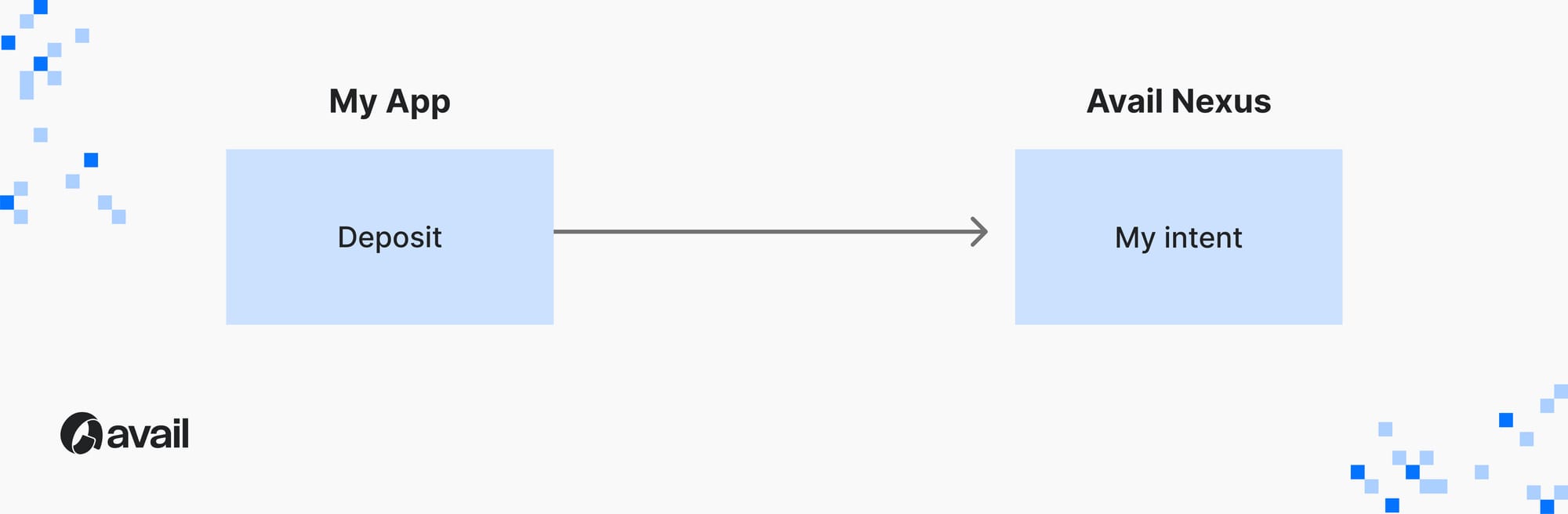
Upon clicking the ‘deposit’ button in your app, an intent is created locally on the user’s machine and sent to Avail Nexus. The intent is essentially the outcome that a user wants to achieve. In our example, this is depositing funds into the smart contract on Chain 3.
Avail Nexus checks the intent against the user’s current balance to ensure it can be done and dynamically renders a transaction sequence.
Solvers
The solver is the participant that assumes the most risk. Anyone can run a solver and collect rewards for doing so. Avail is bootstrapping the network with the initial solvers and will open this role up to the community as it grows.
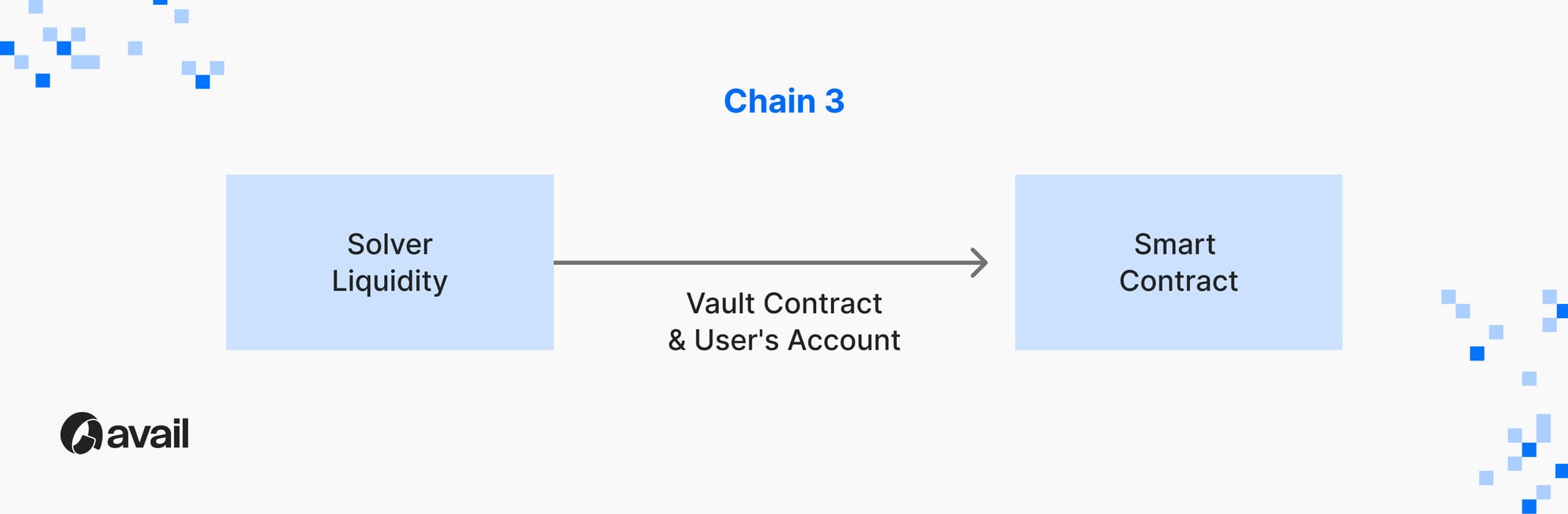
As the solver already has liquidity on Chain 3, the transaction executes quickly for the user, resulting in a seamless UX. The funds fronted by the solver are passed through a vault contract and the user’s account before being deposited into the smart contract on Chain 3.
Vault Contracts
The vault contracts are smart contracts that act as a decentralized escrow for the user and solver. They release funds once proofs verify certain actions have been met.
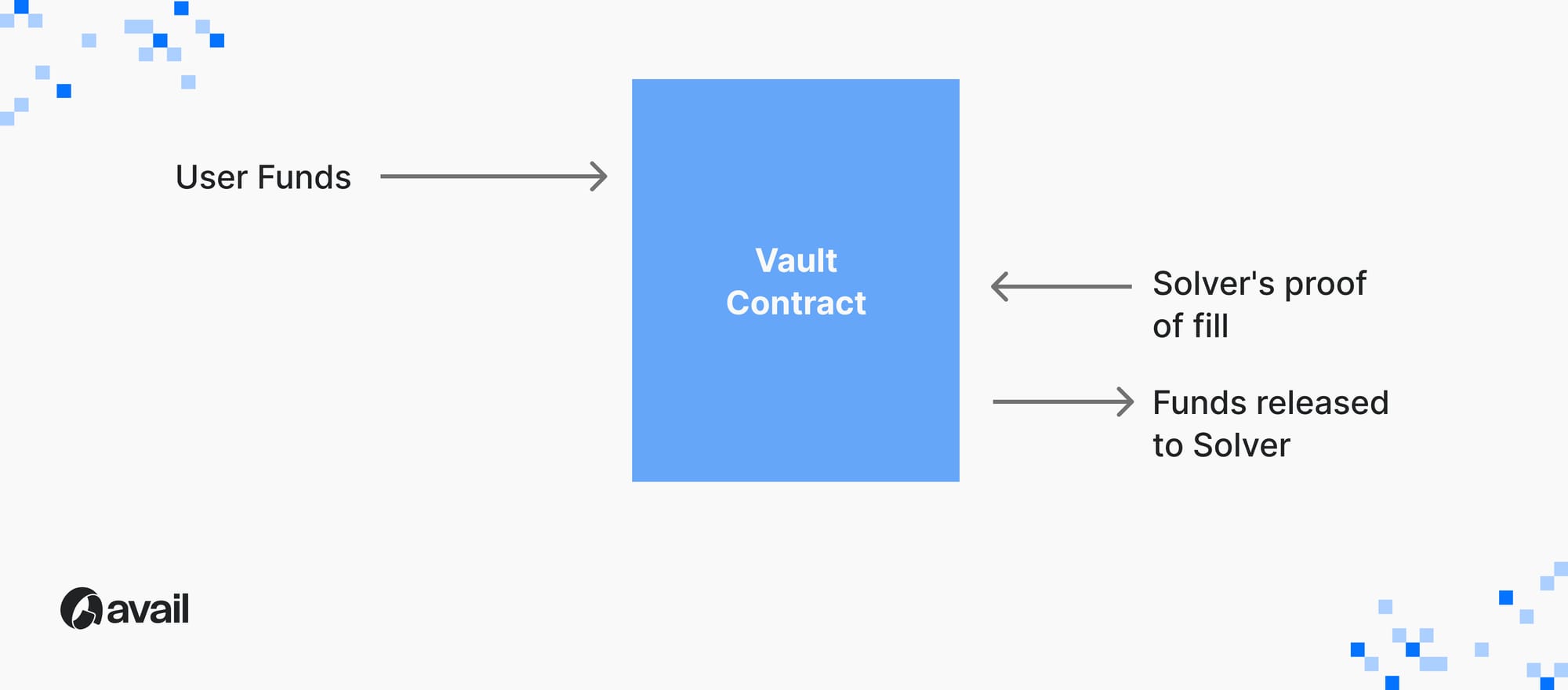
The user’s tokens on Chains 1 and 2 will be held in vault contracts, awaiting the solver’s claim.
Solver Rebalancing
Solver’s will periodically re-balance their liquidity positions to continue fulfilling intents.
In our example, the solver’s token balance would go down on Chain 3 and up on Chains 1 and 2. The solver can move liquidity back to Chain 3, replenishing its reserves.
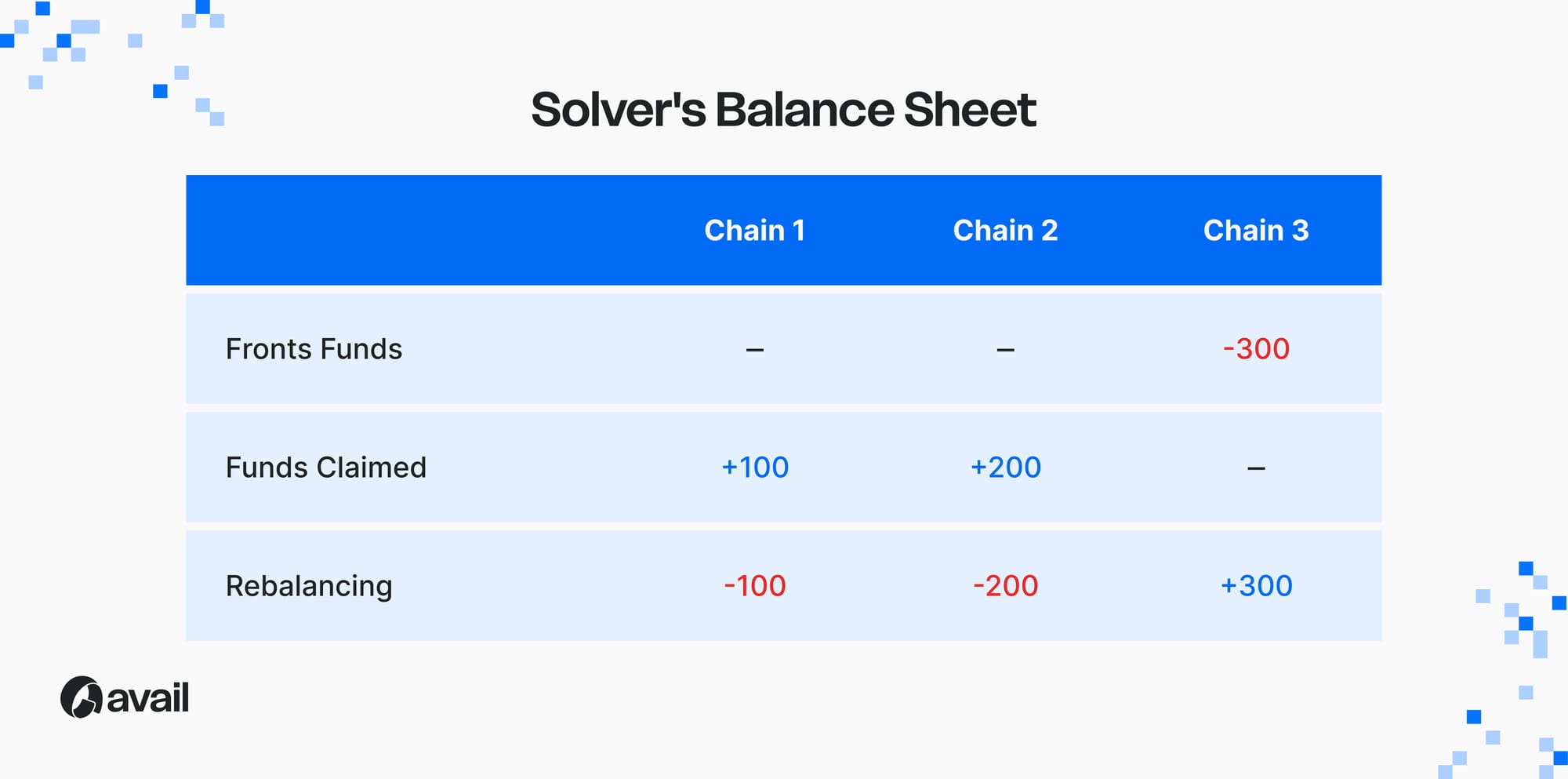
The Nexus solvers leverage existing infrastructure like Wormhole and LayerZero to periodically complete asset rebalancing.
Security Module
Avail Nexus is designed to be a general-purpose coordination layer for crypto. It will not be opinionated on which security module developers use, as differing levels of security are necessary depending on the use case. For example, a $1 tip to a creator doesn’t require the same level of security that a $100,000 deposit into a lending pool does.
The gold standard in security for Avail Nexus will be ZK verified with cryptographic proofs from Avail DA. However, Avail Nexus will also offer other security types to developers. These will be selectable upon integration and include Trusted Execution Environments (TEE), which are in development and undergoing testing, and Multi-Party Computation (MPC), which is currently live.
Avail DA will also play a key role in the Avail Nexus architecture. It will provide the public ledger that guarantees the data behind the decisions Avail Nexus makes is available for anyone to download and independently verify for themselves.
AVAIL Token
The AVAIL token plays a key role in securing the network and aligning the incentives of decentralized actors. Solvers will be required to stake AVAIL to take part in coordinating cross-chain asset movements.
Protocol fee revenue will be used to buy back AVAIL from the market. In parallel, AVAIL demand is also driven by the underlying Avail DA infrastructure, as network activity and data availability usage grow.
Try It Out
You can try Nexus now by connecting to the Showcase App.
You can also use Clober, Mace, Bean Exchange or any other Nexus integrated apps in production, even if you don’t have funds on the chains the app’s are deployed on.
Build With Nexus
The Avail Nexus SDK is live, you can also integrate pre-built Nexus components directly into the front-end of your app using Nexus Elements or launch your own demo app today.
Be sure to tag us on X, we’d love to see what you're building.