
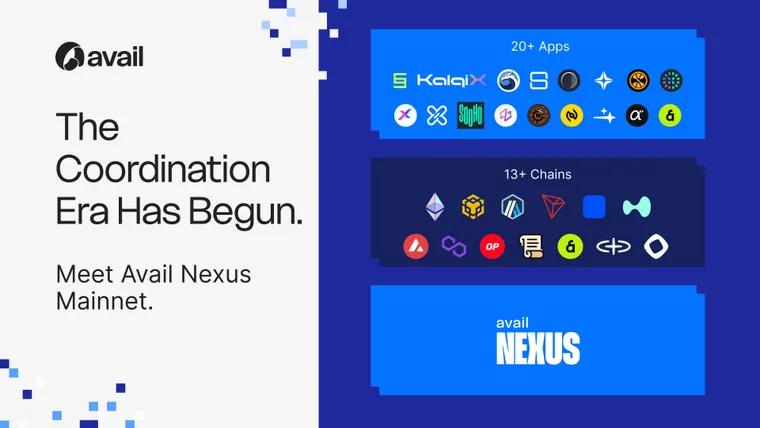
For years, it was believed that the next wave of Web3 adoption would come from building more chains: faster L1s, more modular stacks, cost-efficient L2s, app-specific rollups, zk-powered environments, and specialized execution layers.
This expansion delivered scalability, but it also delivered something else: radical fragmentation of users and liquidity.
Today, web3 users are constantly perturbed trying to understand blockchain nuances, liquidity is trapped in incompatible silos, developers deploy to multiple chains to serve the same community, and every new modular environment is creating yet another closed island.
The chain-first era grew Web3’s surface area. But it didn’t make it feel like one universe.
And that’s why Web3 needs something fundamentally different: not another chain, not another bridge, not another rollup… but an execution spine that unifies all of them.
Multi-chain isn’t the problem. Fragmentation is.
We’re not going back to a single-chain world. And we don’t need to. Not when modular stacks like OP Stack, Polygon CDK, Monad, and Solana extensions are all accelerating in parallel. Not when rollups are becoming the logical unit of scalability. Not when new VMs and execution appchains like Hyperliquid or Aster keep emerging.
This diversity is healthy. It offers choice, innovation, and growth. Fragmentation, however, is not.
Right now:
- Users manage different gas tokens
- Apps fight over fragmented liquidity
- Bridges multiply security risk
- UX varies by chain
- Developers are forced to pick a winning chain in an unpredictable landscape.
This is not how the next 100 million users will onboard. And that is a mantra the industry as a whole has been collectively saying for years.
So something needs to be done to achieve that. And that is exactly where Avail steps in.
What Avail Actually Changes
Over the last three years, Prabal (my co-founder) and I have built Avail on a simple belief:
If chains are the new servers, Web3 needs the equivalent of the Internet’s backbone. That means it needs someone who:
- standardizes verification and proofs,
- unifies multi-faceted interaction,
- coordinates activity across ecosystems,
- and removes fragmentation at the root.
Avail DA is the foundation of this. And Nexus builds the coordination layer on top of this strong foundation.
Monad’s mainnet launch publicly pointed to Avail Nexus as the missing coordination fabric the ecosystem will increasingly rely on as performance scales.
The market is ready for the coordination era.
What Avail Nexus Actually Does
(And no, It’s not “Just Bridging”)
Most people reduce the idea of crosschain to the simplest form: moving assets from chain A to chain B.
But real cross-chain opportunity only emerges when interactions become many-to-many, not one-to-one.
And that’s where Avail changes everything.
Avail Nexus enables applications to access (under the hood) many performant possibilities across the blockchain environment that were previously not possible:
- many-to-many cross-network interactions
- many-to-many crosschain actions in a single instruction
- many-to-many opportunities unlocked
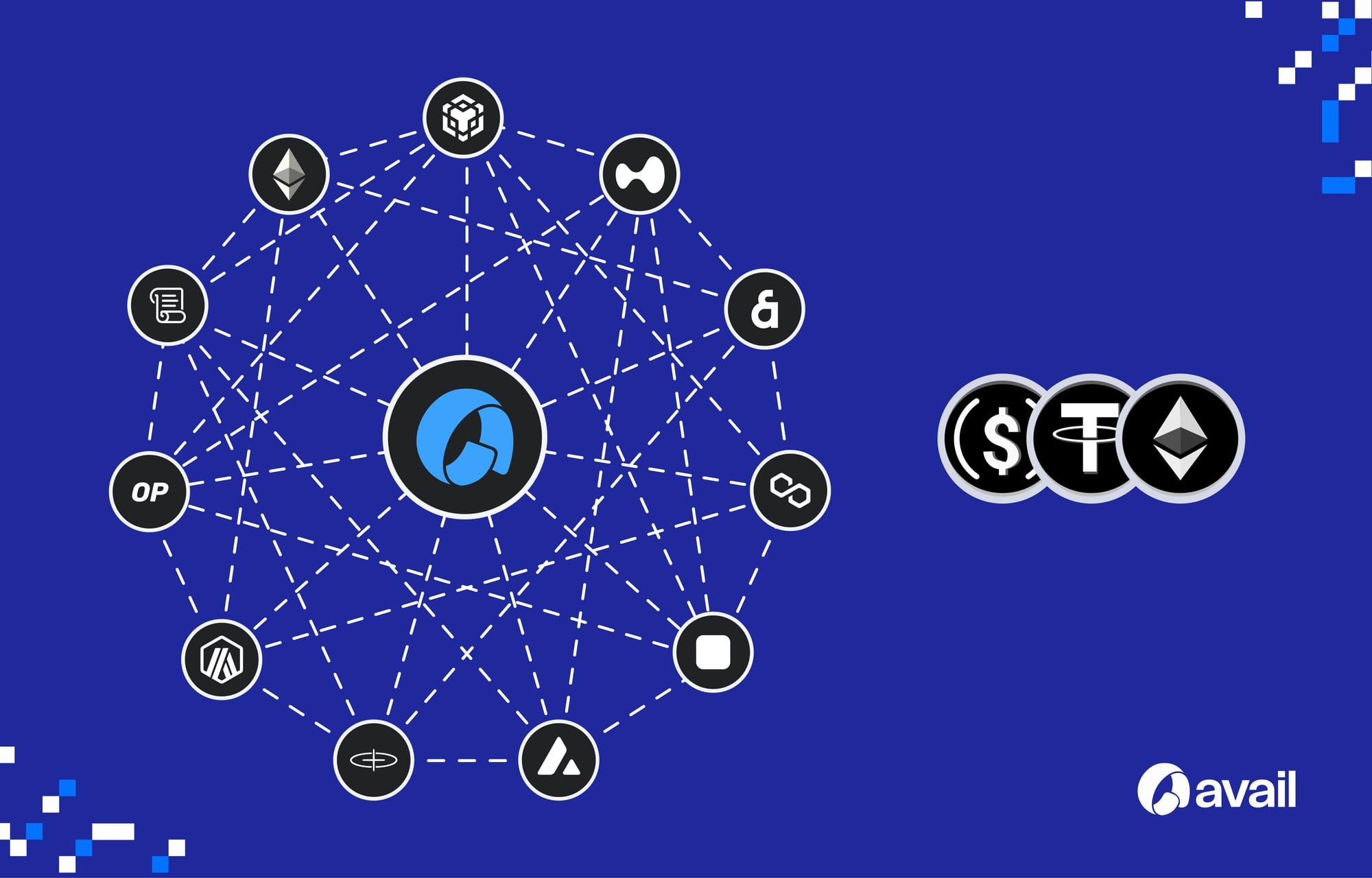
All these are powering a single outcome: technological freedom for the user (giving them what they want in a simple click).
This architecture is built on several pillars:
- An Intent–solver architecture that allows users to express what they want to do; Avail Nexus determines how to do it, automatically finding the optimal route, liquidity source, and execution path.
- Multi-source liquidity allows a single transaction to draw funds from multiple chains simultaneously.
- Exact-Out execution ensures predictable outcomes regardless of where liquidity lives.
- Unified verification, coming soon, powered by Avail DA, for cross-chain actions backed by verifiable data.
With intents, we let users and apps express high-level goals, while Nexus handles the multi-chain execution steps.
We can't wait for users to start experiencing "The Nexus Effect" ✨
— Avail (@AvailProject) November 26, 2025
Forget which chain you're on or what tokens you hold.
You set the intent, and Avail Nexus pulls the right tokens from across chains to get that trade done.
That simple, that easy. pic.twitter.com/4UWcyibYLB
Under the hood, Nexus can automatically coordinate a workflow that may involve:
- swapping A→B on one chain
- sourcing additional liquidity (e.g., Y→Z) from another
- routing the outputs to a target chain
- consolidating into a desired asset and acquiring gas
- depositing into a liquid staking protocol
- minting yield-bearing positions
- selling for immediate returns
Traditionally, this would require multiple transactions across multiple chains, each done manually by the user with different UIs, arranging gas tokens, and maneuvering bridges. With Avail Nexus, all of this becomes one user intent. One action. One click.
That’s not bridging or interop. That’s coordination at the level of an operating universe.
The Three Promises of the Future
1. A single frictionless user experience across ecosystems
Users should never need to understand which chain they’re on, or why it matters. No chain switching, no bridge hunting, no gas-token roulette; all that will be our task.
Nexus handles the entire cross-chain execution flow beneath the surface.
This restores the relationship that always mattered: users → applications (and not users → infrastructure).
2. One global liquidity surface
Liquidity was never meant to be trapped inside individual chains. With Nexus, it becomes:
- universal
- composable
- programmable
- instantly accessible across rollups, L1s, L2s, and appchains.
Whether liquidity lives on chain 1, chain 14, or chain 113 no longer matters. Applications draw from it as if it were all local. This is how Web3 finally unlocks true economic scalability.
3. A programmable universe that acts like one system
Developers don’t want “cross-chain apps.” They want apps, full stop.
Nexus turns the entire multi-chain landscape into a single programmable environment where state, liquidity, and functionality can be accessed from anywhere, by any application, without redesigns or trust trade-offs.
This is what a builder’s technological freedom looks like.
This lets Nexus:
- scale across any ecosystem
- plug into any consensus environment
- and unify without forcing apps to change their rules.
TCP/IP didn’t ask the Internet to agree on one operating system. It just made communication possible. Avail is set to enable that moment for Web3.
We’re building the execution and coordination layer for the next decade of phenomenal applications.
About Avail:
Avail shapes a new era for the onchain economy by transforming how users, apps, and liquidity move across chains. With Avail, both users and developers can access the entire onchain economy from anywhere, without worrying which chain assets or apps live on. Simply plug-in Avail to scale and instantly reach any asset on any chain. Founded by early members of Polygon and backed by Founders Fund, Dragonfly, Cyber Fund, and more, Avail is empowering users and builders to overcome the limitations of legacy blockchain infrastructure.